This browser or device may not support direct Web NFC writing. Use the NFC URL Payload above, or open an NFC writing app and write this URL into the NFC tag.
QR is for face-to-face sharing. Copy Link is for social media, email, WhatsApp, WeChat, notes, or cross-device transfer. NFC writes the same URL into a physical tag. RFID / UWB can map hardware ID to this Capability Link in the registry.
BagSpace
Move My Space in a Bag
Global Gateway / 全球入口
bagspace.tech is the global front door of BagSpace.
bagspace.homelinked.tech is the Mainland China ICP-compliant mirror under the Homelinked domain environment.
BagSpace begins from one small but real point: a bag, a bus-stop anchor, Innospire smart glasses, recycled-material product experience, local materials in Kwun Tong, and students who turned a temporary booth into a real Learning Touchpoint Environment.
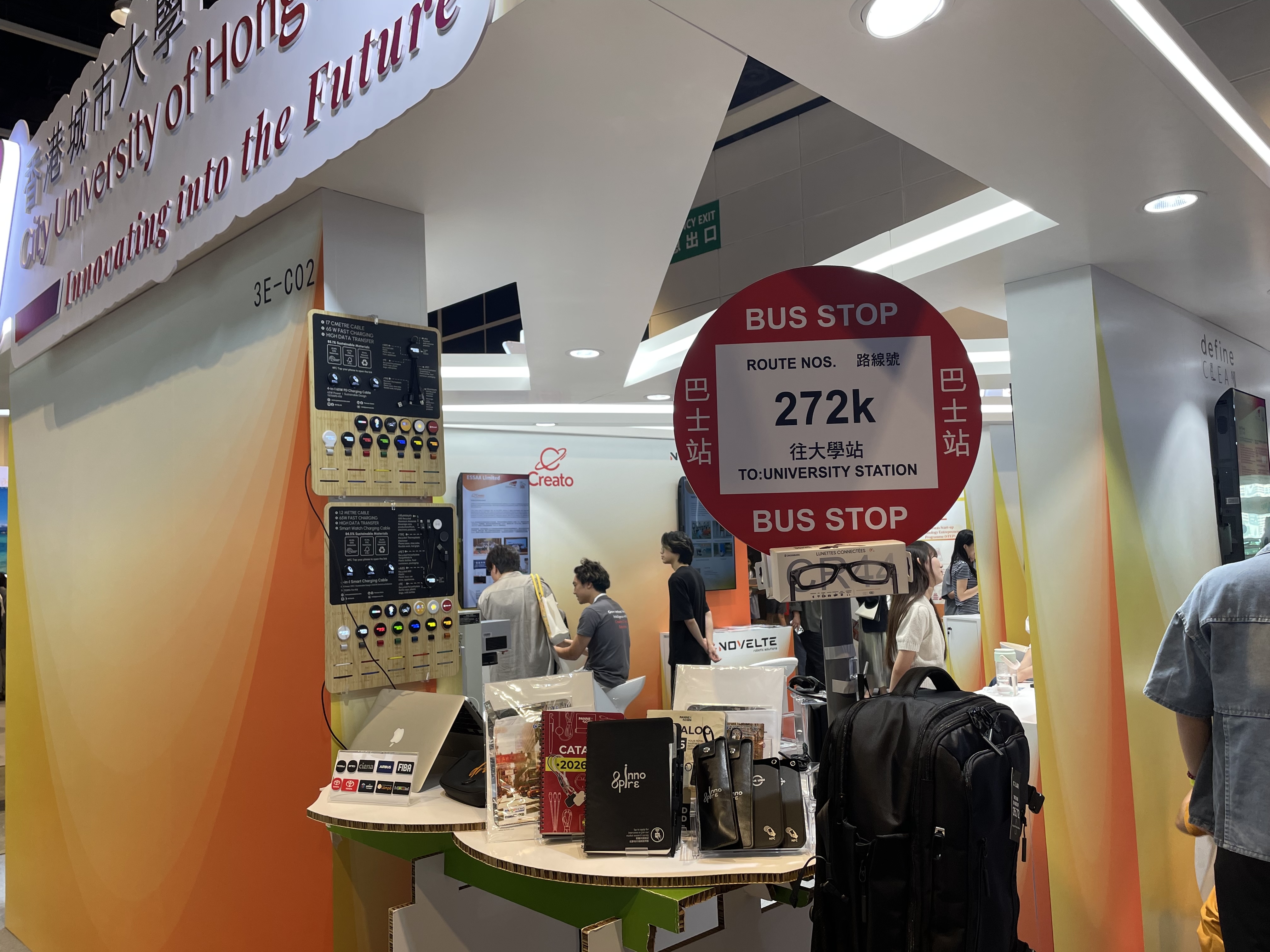
It started from a real Hong Kong scene: a CityU / HK Tech 300 / Learning & Teaching Expo innovation environment, Innospire smart glasses, a Route 272K bus-stop visual anchor, a black vacuum-compressed bag, student hands, recycled-material products, broken computers saved from waste, and a Kwun Tong industrial workspace full of hidden materials, cables, adaptors, screens, tools and unfinished capability.
BagSpace 不是从一个普通产品想法开始的。
它来自一个真实香港现场:CityU / HK Tech 300 / LTE 创新场景、Innospire 智能眼镜、272K 巴士站视觉锚点、一个真空压缩包、学生亲自动手、回收材料产品、差点被丢弃的坏电脑,以及观塘工业空间里大量隐藏材料、电线、适配器、显示屏、工具和未被打开的能力。
This is why BagSpace feels different.
It is not a clean classroom exercise.
It is a project grown from real materials, real space pressure, real students, real industrial waste, real product stories, and real Smart Mobility context.
Real Field Origin / 真实现场起点
This is not a studio advertisement.
This photo shows the real field origin of BagSpace: a temporary exhibition setting, a Route 272K bus-stop anchor, Innospire smart glasses, a black capability backpack, recycled-material product stories, student arrangement, local materials, and a booth built under real constraints.
The booth was not perfect. It was built quickly, with available materials, reused structures, student effort, and real exhibition pressure.
But it was solid. It was useful. It carried an artistic sense. It helped people understand the story immediately.
它不完美,但真实。它用现场材料、可用结构和学生动手快速搭建;但它牢固、实用,也有艺术感。
Angela and Student Design Energy
The visual quality of this temporary space came from student energy — especially design and layout contributions from Angela, a CityU design student with a BU associate-degree background.
Her contribution matters because BagSpace is not only an engineering idea. It is also a design, space, communication and evidence project.
The bag is important because it connects several real stories at once:
Pannex / Helen’s GRS and recycled-material product experience
vacuum-compressed bag logic — carry less empty volume
customer-facing product bundling — a bag can carry other products
student mobility — carry learning, work, tools and evidence
Smart Mobility — capability moves with the person
This is why “Carry Less Air. Carry More Capability.” is not only a slogan. It came from real product work, real exhibition work, real recycled-material products and real student participation.
From Object Detection to Capability Detection
Innospire smart glasses began with object detection and AI navigation.
BagSpace extends that idea:
If AI can detect an object,
can it also detect hidden capability?
A bus-stop sign, a backpack, a cable, a broken computer, a display, a tool, a wooden board, a kitchen corner, a toilet corner or a student desk can all become a touchpoint.
AI 不只是识别物件。下一步是识别物件背后的能力。
Broken Objects Can Become Evidence
Even broken devices can become part of BagSpace. A broken Apple computer that almost entered the waste stream can become a repair-learning object, an e-waste material passport, a student evidence object, and a prompt for AI-assisted value discovery.
坏电脑不一定只是垃圾。它可以成为维修学习对象、电子废物材料护照、学生能力证据,以及 AI 发现价值的入口。
Why This Photo Matters
This photo proves that BagSpace did not begin from a clean PowerPoint slide. It began from real space, real objects, real students, real constraints and real improvisation.
That is why BagSpace can speak to students, channels, customers, suppliers, universities and partners.
It is practical enough to use, emotional enough to remember, and open enough for students to join.
One-Sentence Definition
BagSpace turns small, constrained, expensive spaces into portable, personal, modelable and evidence-ready capability spaces.
BagSpace 把狭小、昂贵、受限制的空间,转化为可携带、可私属、可模型化、可证据化的能力空间。
It is not only a bag.
It is a way to move your learning space, work space, living space, power system, tools, materials, local compute node and AI capability with you.
Inspired by Smart Mobility
BagSpace extends Smart Mobility from moving people to moving capability.
Traditional Smart Mobility focuses on transport, route, public safety, navigation and mobility services.
Important boundary: This public reference anchors the Smart Mobility direction. It does not mean BagSpace itself is government-certified or officially endorsed.
Connected to CityU / HK Tech 300 Innovation Energy
BagSpace was activated in an environment where CityU, HK Tech 300, students, start-ups, education innovation and real exhibition pressure came together.
HK Tech 300 represents a strong Hong Kong university innovation and entrepreneurship ecosystem. BagSpace does not claim to be an official HK Tech 300 project unless separately confirmed. Instead, BagSpace learns from that ecosystem: students, start-up energy, real demonstration, public visibility, and the courage to turn university ideas into reality.
BagSpace 的精神与香港高校创新创业生态相连:学生、创业、展示、动手、真实问题、真实成果。
For students, this matters because BagSpace is not only something to observe. It is something they can join, build, document and prove.
Innospire Smart Glasses: From Object Detection to Capability Detection
Innospire’s smart glasses started from AI object detection and navigation.
But BagSpace asks a further question:
If AI can detect an object, can it also detect hidden capability?
A pair of smart glasses can detect a bus stop.
It can detect a sign.
It can detect a tool.
It can detect a screen.
It can detect a broken laptop.
It can detect a cable, adaptor, bag, shelf, workbench, kitchen corner or toilet corner.
Then the next question becomes:
What capability is hidden here?
What can be reused?
What can be moved?
What can be powered by USB-C?
What can become a learning touchpoint?
What can become evidence?
What can continue?
This is the shift from object detection to capability detection.
这就是从“物件识别”走向“能力识别”。
The Pannex / Helen GRS Vacuum Bag Story
BagSpace was also shaped by years of frontline experience with GRS / recycled-material gifts, NFC products, cables and customer-facing product stories.
At the exhibition, a real vacuum-compressed bag became more than a bag.
It carried a material story.
It carried a “less air” story.
It carried a product-selling story.
It carried a question:
If a bag can carry fewer empty materials and less wasted volume, can it also carry more capability?
The bag story is powerful because customers understand it immediately.
A customer buys a bag.
The bag can contain other products.
The bag can reduce wasted empty space.
The bag can carry smart glasses, NFC cable, USB-C power, tools, documents, samples, local materials and small compute devices.
So “Carry Less Air. Carry More Capability.” becomes practical.
It is not only a slogan.
It is a product logic.
It is a sales logic.
It is a mobility logic.
It is a material-localization logic.
It is also a student learning logic.
For Pannex / Helen, BagSpace gives a new explanation for GRS and recycled-material products: not just material compliance, but capability carry.
Broken Apple Computers and the Value of Not Throwing Things Away
BagSpace also came from a very practical moment: broken Apple computers that could have gone into waste were stopped, observed, recovered and reinterpreted.
To many people, a broken laptop is waste.
To BagSpace, it can become:
a Reality Teaching Object
a repair-learning object
an e-waste material passport
a local compute possibility
a student evidence object
a prompt for AI-assisted value discovery
A broken object is not only waste.
It can become a classroom.
坏电脑不一定只是垃圾。它可以成为学习对象、维修对象、材料证据、AI 识别对象和学生能力证明。
Kwun Tong Local Materials Capability Bank
Kwun Tong is full of hidden materials and tools.
Some people see industrial waste.
BagSpace sees local capability.
Examples:
cables
adaptors
batteries
display modules
wood boards
metal parts
old machines
laser tools
hardware supplies
plastic and packaging materials
repair tools
kitchen corners
toilet corners
workbench corners
storage corners
Each object can become a Reality Touchpoint.
Each Reality Touchpoint can become a Capability Passport.
Each Capability Passport can become evidence for students, suppliers, partners and future customers.
观塘不是旧工业空间。观塘可以成为本地材料能力银行。
Why Students Matter
BagSpace became real because students were willing to touch, carry, assemble, explain, move, redesign and improvise.
They did not just listen to a lecture.
They helped turn a small exhibition table into a richer learning and product environment.
They saw that:
a bag can become a capability carrier
a cable can become an activation handle
a broken computer can become a learning object
a bus stop can become a smart mobility anchor
a small space can become a modelable capability space
a student project can become public evidence
BagSpace is designed for students from different disciplines, universities and countries.
They do not need to be the same.
Some may be good at design.
Some may be good at AI.
Some may be good at hardware.
Some may be good at business.
Some may be good at writing.
Some may be good at photography.
Some may be good at repair.
All of them can contribute.
Every student can leave with evidence, not only experience.
Why Space Is the Real Opportunity
In Hong Kong, space is not just expensive. Space is the biggest hidden constraint and the biggest hidden value point.
A student room, hostel bed, small office, exhibition booth, Kwun Tong industrial corner, kitchen, toilet, corridor, desk, storage rack or workshop can all become more capable.
Traditional thinking says:
Buy more space
Add furniture
Rent a bigger office
Install more equipment
BagSpace says:
Model the space
Compress the function
Use local materials
Add USB-C power
Add small compute
Add AI navigation
Add runtime evidence
Move the capability with you
BagSpace sells capability density.
BagSpace 卖的不是普通背包,而是单位空间里的能力密度。
Core Formula
Local Materials
+
USB-C Power
+
Portable Structure
+
Local Compute
+
AI Navigation
+
Runtime Evidence
=
Move My Space in a Bag
For students attending online classes, learning with AI and working in small rooms.
phone stand
USB-C light
cable management
small display
NFC learning entry
AI Runtime login guide
2. WorkSpace in a Bag
For mobile work, internships, exhibitions, demos, supplier meetings and remote collaboration.
USB-C hub
smart glasses
NFC cable
small keyboard
small display
local server entry
3. PowerSpace in a Bag
For low-voltage USB-C power continuity.
USB-C PD
5V / 9V / 12V / 20V mapping
adaptor classification
battery safety notes
USB-C tester
power asset passport
4. ComputeSpace in a Bag
For small local compute nodes such as 736 / Ubuntu devices.
small Ubuntu server
local Wi-Fi / LAN
SQLite
JSONL
local web runtime
student dorm / booth / office compute node
This is one of the largest opportunities: every small space can become a local compute node.
5. RepairSpace in a Bag
For tools, repair learning, low-voltage diagnostics and RFID / NFC asset records.
screwdriver
multimeter
USB-C tester
RFID / NFC labels
repair log
tool passport
6. LivingSpace in a Bag
For small-room, kitchen, toilet and hygiene support. Low-risk first.
low-voltage night light
hooks
storage
cleaning record
NFC guide
small-space habit support
Why Channels, Customers and Suppliers Should Care
BagSpace creates a new product and service category:
Small Space
+
Local Materials
+
USB-C Power
+
Portable Structure
+
Local Compute
+
AI Runtime
+
Evidence
Channels can sell BagSpace Kits.
Customers can customize BagSpace for learning, work, travel, exhibition, dormitory, office and small-room living.
Suppliers can contribute materials, components, cables, adaptors, tools, recycled materials, small servers, displays and modules.
Each supplier contribution can become part of a Capability Passport and Evidence Page.
BagSpace is suitable for:
students
global mobile workers
small offices
exhibition teams
startup teams
suppliers
universities
training projects
ESG / GRS product stories
smart mobility / smart living pilots
BagSpace Ready for InstantReady
BagSpace is designed to become ready for InstantReady.
Every object can become a touchpoint.
Every touchpoint can open context.
Every context can support AI navigation.
Every AI-guided interaction can become evidence.
Every evidence record can support continuity.
Object
↓
Touchpoint
↓
Context
↓
AI Navigation
↓
Capability Link
↓
Capability Passport
↓
Capability Container
↓
Continuity
First 7-Day Student Sprint
Day 1 — Discover
Each student finds 10 real objects, materials, tools, power items or space problems.
Day 2 — Record
Take photos and record location, material, possible use, safety risk and BagSpace module.
Day 3 — Classify
Classify into StudySpace, WorkSpace, PowerSpace, ComputeSpace, RepairSpace or LivingSpace.
Day 4 — Build One Small Prototype
Build one small improvement for a real learning, work or living problem.
Day 5 — Document
Write what was built, why it matters and what was learned.
Day 6 — Publish Evidence
Prepare photos, notes, SQLite / JSONL records and evidence pages.
Day 7 — Share
Explain the idea to another student, supplier, customer or partner.
Safety Boundary
Low-voltage first.
No unsafe battery modification.
No 220V experiment without supervision.
No unattended heating devices.
No blocking fire exits or public corridors.
No confidential customer data.
No passwords, API keys or private SSH keys.
No unsupported official endorsement claims.
No unsupported ESG or carbon-reduction claims.
Call for Students
Design your own learning, work and living space.
Put it in a bag.
Prove it with evidence.
Bring your friends.
设计你自己的学习、工作和生活空间。
把它装进包里。
用证据证明它。
带你的同学一起来。
Call for Partners
If you are a supplier, channel partner, school, training partner, property owner, maker, designer, engineer, ESG product team or global mobile worker, BagSpace invites you to contribute:
materials
tools
USB-C power modules
adapters
small displays
portable structures
local compute nodes
student problems
small-space scenarios
real deployment opportunities
Every contribution can become part of the BagSpace Capability Evidence system.
Final Statement
BagSpace is a student-driven Smart Mobility extension that turns local materials, USB-C power, small computing nodes, tools, recycled-material products and Hong Kong micro-spaces into portable, personal, modelable and evidence-ready capability spaces.